Fruit thinning
The application of biopesticides and bioregulators is slowly but surely taking its place in agricultural production. Their application has numerous advantages. In addition to being safe for health and the environment, it enables the production of high-quality and healthy fruits, without time limits in application, and thus ensures an increase in yield.
Regulation of growth and fertility in addition to pruning in high-intensity cultivation systems is possible only with thinning of apple fruits with growth regulators, all with the aim of achieving a higher yield and better quality fruits. By thinning the fruits, a certain number is left on the tree, which gives the desired yield, of appropriate quality. The goal of thinning is to leave one (central) or two fruits in the bunch, while the other less developed ones fall off. During thinning, the plant discards those fruits that are smaller, and keeps the larger ones, from which we get the highest quality yields in terms of size, color and shape. In addition, compacted fruits in the bunch can cause other negative consequences, which affect the final yield:
– Insufficient ventilation, ie the occurrence of fruit disease;
-Insufficient coloring of apple fruits;
-Insect attack, especially the Cydia pomonella butterfly, whose larva prefers to burrow in the place where two fruits meet;
– If the apple fruits are not thinned, the trees may enter the alternative stage and the following year the crop may be partially or completely absent, etc.
Until now, the fruits were mostly thinned with synthetic preparations or by hand. Synthetic preparations can cause a number of harmful effects on the plant. When applying them, it is necessary to take into account the weather conditions, but also the residues in the fruits when applying herbicides for this purpose, as well as the variety of apple that we want to thin out, all this in order to avoid phytotoxicity in the case of hormonal preparations. Besides the fact that they can cause phytotoxicity, most of them are not even registered for application, which further complicates the whole process.
Manual thinning significantly increases production costs and complicates production, especially when it comes to plantations on large areas. Also, another increasingly prevalent problem of manual thinning is the lack of manpower.
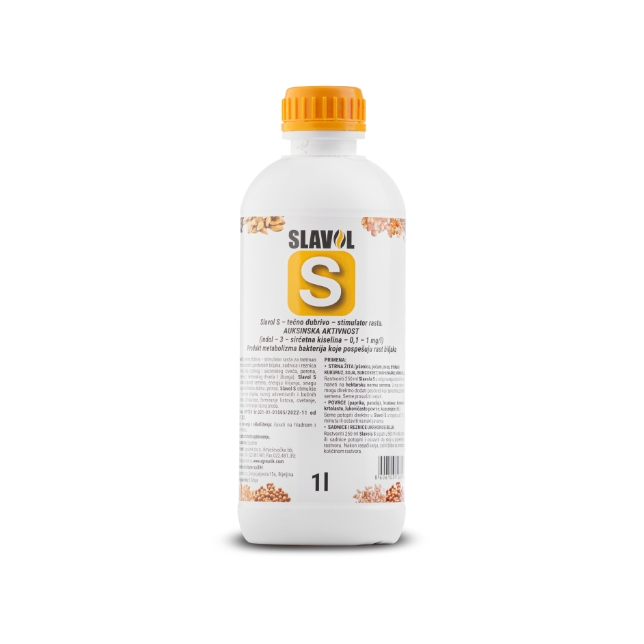
KARPO and AUKSOL are certified and registered bioregulators.
KARPO and AUKSOL contain bacteria that stimulate growth and development. Those bacteria belong to the 1st group of microorganisms, which are used in the pharmaceutical industry and are useful for humans. They produce plant hormones as secondary metabolites: auxins, cytokinins, gibberellins, abscisic acid and salicylic acid.
Their application affects the hormonal status of the plant, which directs the physiological processes of the plants, and avoids the harmful consequences that synthetic hormones can cause.
The role of cytokinin is in cell division and affects the presence of chlorophyll in the plant.
The plant growth hormone auxin contributes to the elongation of shoots and hinders (inhibits) the growth of lateral buds, and stimulates the growth of the central fruit in the vine. Natural plant auxins are produced in apical buds, young leaves and developing seeds.
ADVANTAGES OF BIOREGULATOR APPLICATION:
-KARPO and AUKSOL contain biologically active compounds, cytokinins, auxins and gibberellins;
– They do not cause phytotoxicity because they contain natural biodegradable compounds that the plant can metabolize. By applying them for the purpose of thinning, natural June thinning is imitated due to the reduced transport of auxin to the lateral, less developed fruits and a separation layer is formed, after which they fall off;
-They are safe to use;
-Safe for the plant;
– Safe for the environment;
– There are no residues in the fruits with their application;
-Effectiveness is in small concentrations and in a wide range of fruit diameters from 6-15 mm.
Roles of auxins and cytokinins:
– They direct the physiological processes in the plant;
– They affect the elongation of cells and organs;
-Promote rhizogenesis – formation of the root system.
AUKSOL is recommended for thinning apple fruits when they are 6-10 mm in diameter, while the application of KARPA is recommended when they are 10-15 mm in diameter, with a 0.5-1% solution depending on the apple variety and the reproductive potential of the current growing season.
These preparations cannot cause phytotoxicity, because they contain natural biodegradable compounds, which the plant can metabolize. They are safe for use, for human health and do not leave residues in the fruits.
Wetting agent LEPILO is a microbiological preparation, which improves the action of pesticides and foliar fertilizers. It increases absorption and translocation, affects better adhesion of deposits and reduces the risk of being washed away by rain and degradation under the influence of sunlight. It is necessary to apply it with each treatment, for the sake of better adoption of the deposit, and therefore for a better and longer effect.
Milica Milić, B.A.
Tel: +3816469741